

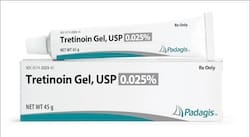
Buy Tretinoin Gel Online for Clear Skin Today
Acne Treatment and Skin Renewal
Think of your skin cells like a busy highway. Normally, traffic flows smoothly, but with acne, a massive pile-up of dead skin cells clogs the lanes. Tretinoin acts like a high-speed traffic controller, speeding up the rate at which your skin cells turn over. It forces those old, stubborn cells to exit the stage.
By accelerating this cellular turnover, the gel ensures that dead skin doesn’t linger on the surface. This is the core of its mechanism of action. Instead of letting debris settle in your pores, the medication pushes new, healthy cells to the surface. It’s essentially a deep-cleaning crew working from the inside out.
Because it targets the very foundation of skin renewal, it addresses the root of the problem. It isn’t just a temporary fix; it is a fundamental shift in how your skin behaves. By regulating how your skin cells mature, it prevents the “clog” before it ever has a chance to settle in.
Targeting Inflammation and Oil
If you have oily skin, you might feel like you’re constantly fighting a losing battle against shine. This is where the gel formulation truly helps. Unlike creams, which can feel heavy or greasy, the gel absorbs almost instantly. It dives deep into the pores to tackle the inflammation that makes breakouts so painful.
The gel’s lightweight texture makes it a favorite for those with stubborn, acne-prone skin. It penetrates the skin’s surface quickly, delivering the active retinoid directly to the site of the trouble. It’s like a targeted strike against the redness and swelling that often accompany a sudden, angry pimple.
When a breakout occurs, the gel works to reduce the severity of the inflammation. It helps calm the skin’s overactive response to bacteria and oil. Instead of a large, red bump, the inflammation is managed, allowing the skin to settle down much faster than it would naturally.
Using a gel can feel like a breath of fresh air for your complexion. Because it doesn’t leave a thick residue, it won’t add extra weight to your skin. This is particularly beneficial if you are already struggling with excess sebum production throughout the day.
Healing and Prevention Strategies
There is a distinct difference between fighting a current war and building a fortress. Tretinoin is unique because it performs both roles simultaneously. It works to promote the quick healing of existing pimples that have already surfaced, helping to diminish their appearance and lifespan.
However, the real magic happens when you look toward the future. While it heals what is there, it also works to prevent new lesions from forming. By keeping the pores clear through constant renewal, it stops the cycle of acne before a new pimple can even begin to bud.
It is a bit like maintaining a garden. You can pull the weeds that have already grown, but the real goal is to prepare the soil so no new weeds can take root. Tretinoin prepares your “skin soil” by ensuring nothing can get stuck in the cracks.
Managing your skin becomes a dual-action process. You’re simultaneously treating the active inflammation and reinforcing your skin’s natural defenses. This two-pronged approach is why many dermatologists consider it a gold standard for long-term skin health and clarity.
| Feature | Tretinoin Gel Benefit |
| Primary Use | Treating acne and pimples |
| Skin Type | Ideal for oily or acne-prone skin |
| Absorption | Quick-absorbing, lightweight texture |
| Starting Price | $38.68 |
Gel vs Cream Formulations
Choosing between a gel or a cream isn’t just about personal preference; it’s about how your skin “drinks” the medication. Think of your skin like a thirsty sponge. Some sponges soak up water instantly, while others need a bit more time to absorb a heavy liquid. This difference in texture dictates how the active ingredient travels into your pores.
The gel formulation is often the “sprinter” of the skincare world. Because it lacks the heavy oils found in creams, it moves through the skin’s surface with remarkable speed. This rapid absorption means the tretinoin reaches its target almost immediately, making it a powerhouse for those looking for direct action against stubborn breakouts.
In contrast, creams act more like a slow-release marathon runner. They sit on the surface for a longer duration, creating a protective barrier that slowly lets the medication seep into the deeper layers. While this might seem less efficient, it is actually a deliberate design to prevent the irritation that often comes with rapid delivery.
Understanding this distinction is the key to avoiding the “peeling disaster” many beginners face. If you jump into a high-strength gel without preparing your skin, you might find yourself looking a bit like a lizard in a week. Knowing which vehicle suits your specific skin chemistry can save you a lot of redness and frustration.
The Texture Tug-of-War
If your face feels like an oil slick by lunchtime, the gel is likely your best friend. For those with oily or acne-prone skin, the lightweight nature of a gel is a godsend. It doesn’t add any extra grease to your already busy sebum production, allowing it to work without clogging your pores further.
On the other hand, if your skin feels tight, itchy, or flaky, a cream is your sanctuary. Dry or sensitive skin types often struggle with the “punch” that a gel delivers. For these individuals, the emollient properties of a cream act as a buffer, soothing the skin while the medication goes to work quietly in the background.
It is a delicate balancing act between potency and comfort. A gel often feels more intense because it hits the skin with such high velocity. This can be a double-edged sword; it fights acne aggressively but can also trigger the redness that makes people want to quit their routine altogether.
Ultimately, your skin type is the compass that should guide your choice. You wouldn’t wear a heavy wool sweater in the middle of summer, just as you wouldn’t use a thin, watery gel when your skin is parched and cracking. Listen to your skin’s signals to decide which texture belongs in your nightly ritual.
To help you navigate your options, we have outlined some common market starting points below.
| Product Type | Common Skin Target | Estimated Starting Price |
|---|---|---|
| Tretinoin 0.01% Gel | Acne-Prone / Oily | $38.68 |
| Tretinoin 0.025% Gel | Moderate Acne | $42.50 |
| Tretinoin Cream | Dry / Sensitive | $45.00 |
| Tretinoin 0.05% Cream | Aging / Very Dry | $52.00 |
Pricing and Cost Savings
Navigating the financial side of skincare can feel like trying to walk through a thick fog. You know what you want, but the actual cost often remains obscured until you reach the checkout counter. For many, the sticker shock of prescription topicals can be a major deterrent to maintaining a consistent nightly routine.
Fortunately, the market for tretinoin is more accessible than it used to be. Current market data shows that prices for this essential retinoid can start as low as $38.68. This entry point makes it much easier for budget-conscious individuals to begin their journey toward clearer, smoother skin without breaking the bank.
However, finding that lowest price requires a bit of legwork. It is rarely a matter of walking into the first pharmacy you see and finding the best deal waiting on the shelf. You have to be a bit of a detective to ensure you aren’t overpaying for the same tube of gel.
If you are looking to keep your expenses under control, keep a close eye on major retailers. Large chains like CVS and Walgreens are the heavyweights in this arena, but they don’t always play by the same rules. Their pricing structures can vary wildly depending on your location and current promotions.
Sometimes, one pharmacy might offer a significantly lower price for the same 0.025% gel, while another might have a higher base cost but offers better loyalty rewards. It is worth taking ten minutes to compare these giants; that small effort could save you several dollars every single month.
To get the most bang for your buck, you should embrace the world of digital savings. Using coupons and specialized savings tools is not just for people on a tight budget; it is a smart move for anyone looking to optimize their healthcare spending. These tools can bridge the gap between a high retail price and an affordable prescription.
Many modern platforms allow you to compare prices across multiple pharmacies instantly. By using these digital assistants, you can find hidden discounts that aren’t immediately obvious on the pharmacy’s main website. It is like having a personal shopper dedicated to your wallet.
You might also find success by utilizing manufacturer coupons or pharmacy-specific discount programs. Many people overlook these, assuming they are only for expensive brand-name medications. In reality, even generic tretinoin gel can benefit from a well-timed discount code or a pharmacy loyalty perk.
When you sit down to look at your final receipt, several different variables will influence that final number in USD. It isn’t just about the gel itself; there are several moving parts in the machine that determine what you actually pay at the register.
Several key factors can shift the price:
- The specific strength of the gel, such as 0.01% versus 0.05%.
- The total quantity of the tube or the number of months of supply.
- Your specific insurance coverage and deductible status.
- Whether you are paying out-of-pocket or using a discount card.
It is also worth noting that local geography plays a role. A pharmacy in a high-cost urban center might charge more for the same medication than a rural location. Always keep a little wiggle room in your budget to account for these inevitable fluctuations in the marketplace.
Application and Dosage Protocols
Using tretinoin gel is a bit like driving a high-performance sports car; it is incredibly effective, but if you’re too aggressive, you’re going to crash. This medication is strictly for external use only. You must never take it by mouth, as it is designed specifically to interact with the layers of your skin to treat acne and promote healing.
The standard approach is to apply a tiny amount to a clean, completely dry face. If your skin is still damp when you apply the gel, you are essentially inviting trouble. Moisture can act as a carrier, pulling the medication deeper and faster than your skin can handle, which often leads to unwanted redness or peeling.
Think of your skin as a garden that needs careful tending rather than a flood of water. You want to be precise and disciplined. Most dermatologists suggest applying the gel in the evening, as sunlight can break down the active ingredients, making your expensive tube of gel much less effective than it should be.
To avoid a “hot” sensation or severe irritation, start slow. You don’t need to jump into the deep end on night one. A common way to begin is by applying it every second or third night. This allows your skin’s natural barrier to build up its defenses before you move toward a nightly routine.
The Golden Rule of the Pea-Sized Amount
It is a common temptation to slather the gel all over your face, thinking that more product equals faster results. However, more is definitely not better when it comes to retinoids. In fact, using too much is the fastest way to end up with a face that feels like sandpaper.
You only need a single, pea-sized amount for your entire face. If you find yourself using a dollop the size of a nickel, you are essentially throwing money down the drain. A little goes a long way, and being stingy with the gel is actually the key to long-term success.
I once spoke with a client who thought she was “doing it right” by using a heavy layer to speed up the process. She ended up with such intense irritation that she had to stop using it entirely for two weeks. Patience is a virtue, especially when your skin is adjusting to a potent new ingredient.
Spread that tiny dot across your forehead, cheeks, and chin using your fingertips. Ensure the product is distributed thinly and evenly. If you leave thick patches of gel in certain areas, those spots will likely become red, flaky, and quite uncomfortable by the next morning.
Avoiding Common Application Pitfalls
Many people fall into the trap of applying tretinoin too close to sensitive areas. It is wise to avoid the corners of your nose, the corners of your mouth, and your eyelids. These areas are much thinner and prone to cracking and extreme dryness when exposed to the gel.
Another mistake is neglecting the “sandwich method” if your skin starts to feel particularly sensitive. This involves applying a light layer of moisturizer, then your tretinoin, and then another layer of moisturizer on top. It acts as a buffer, slowing down the absorption just enough to minimize irritation.
You should also be mindful of what else is in your nighttime routine. If you are simultaneously using other exfoliating acids like salicylic or glycolic acid, you are essentially throwing gasoline on a fire. Stick to the gel and a gentle, hydrating moisturizer to keep things stable.
Finally, don’t forget the sun. Even if you apply it at night, your skin will be more sensitive to UV rays the following day. If you aren’t wearing a daily SPF, you are fighting a losing battle against the sun, which can lead to more discoloration rather than the clear skin you seek.
| Application Mistake | The Likely Consequence | The Better Way |
| Applying to damp skin | Increased irritation and stinging | Wait 15–20 minutes after washing |
| Using too much product | Peeling, redness, and dryness | One pea-sized amount only |
| Applying near eyes/mouth | Localized cracking and redness | Avoid sensitive “creases” |
| Skipping sunscreen | Increased sun sensitivity | Apply SPF 30+ every morning |
Managing Side Effects and Sensitivities
Navigating the world of retinoids can feel like walking through a minefield of skin reactions. Many users encounter a sudden wave of dryness or visible peeling as the gel works its magic. This isn’t necessarily a sign that something is wrong; rather, it is often your skin’s way of shedding the old to make room for the new.
It is quite common to notice a certain “tightness” across your cheeks or forehead during the first few weeks. While it might be tempting to reach for a heavy, scented body lotion, that is a mistake. You need something specifically designed to support the skin barrier without clogging your pores or adding unnecessary fragrance.
Think of these initial reactions as a rite of passage. If you experience mild redness or a slight sting when applying your moisturizer, you are likely in the thick of the adjustment phase. Stay the course, but keep a close eye on how your complexion behaves as the weeks roll by.
The Purge and the Peeling Phase
You might experience what many call the “retinoid purge.” This is a period where underlying congestion is pushed to the surface, often resulting in a temporary increase in breakouts. It feels counterintuitive to use an acne treatment that seems to be causing more pimples, but it is actually a sign of deep cleaning.
During this phase, your skin might look a bit worse before it looks significantly better. It is a bit like cleaning out a cluttered closet; things look messy on the floor before they are neatly tucked away. If you skip the gel during this time, you might actually prolong the congestion you are trying to clear.
The physical shedding of skin cells is another hallmark of the experience. Fine flakes might appear around your nose or chin, making your makeup sit unevenly. Instead of scrubbing these flakes away with a harsh physical exfoliant, let them fall off naturally through gentle cleansing and heavy hydration.
If you find the peeling becomes unbearable, try reducing the frequency of your application. You don’t have to push through intense pain to see results. Sometimes, taking a “skin break” for a few days allows the inflammation to settle before you resume your routine at a slower pace.
Strategies for a Smooth Transition
Minimizing irritation is an art form that requires a bit of trial and error. One of the most effective tactics is the “buffer method” mentioned earlier. By placing a moisturizer between your skin and the gel, you create a protective shield that slows down the absorption rate.
Focusing on your “moisture sandwich” can also work wonders. Start with a gentle, non-comedogenic cleanser, apply a hydrating serum, then your pea-sized amount of tretinoin, and finish with a rich, ceramide-based cream. This layered approach keeps the skin’s moisture levels stable while the active ingredient does its heavy lifting.
Another vital strategy is to simplify your entire regimen. If you are using Vitamin C serums, AHAs, or BHAs alongside your gel, you are essentially asking for a chemical burn. For the first month, keep things basic: a gentle cleanser, a soothing moisturizer, and a high-SPF sunscreen every single morning.
If you are on a budget, remember that you don’t need a dozen luxury products to manage these side effects. You can often find effective, dermatologist-recommended basics for under $20. For instance, some generic moisturizing creams can be found for as little as $12, making a smooth transition much more affordable.
Always remember that consistency beats intensity. It is far better to use a low concentration twice a week without irritation than to use a high concentration every night only to end up with a red, angry face. Your skin needs time to build up its natural resilience.
When to Seek Professional Help
While a little redness is normal, there is a clear line between “adjusting” and “reacting.” If your skin begins to weep, develops crusty scabs, or feels intensely hot to the touch, you need to stop using the product immediately. These are signs of a compromised skin barrier or a potential allergic reaction.
It is also important to watch for swelling or hives. If you notice significant swelling around your eyes or lips, this is not a standard side effect of tretinoin. In such cases, you should contact your doctor or dermatologist right away to ensure you aren’t dealing with a more serious sensitivity.
If you have been using the product for several months and your skin still feels constantly inflamed or extremely sensitive, it might be time to reconsider your formula. Sometimes, a lower concentration or a different delivery method, like a cream instead of a gel, might be better suited for your specific skin type.
Ultimately, your dermatologist is your best ally. They can help you determine if you are experiencing a normal “purge” or if you should switch to a different acne treatment entirely. Don’t be afraid to ask them questions; they have seen these reactions countless times before.
| Sensation | Likely Cause | Recommended Action |
| Mild tightness/dryness | Normal adjustment to retinoids | Increase moisturizer use |
| Increased breakouts | The “retinoid purge” | Continue use, but be patient |
| Intense stinging/burning | Skin barrier is compromised | Stop use; consult a professional |
| Persistent redness/swelling | Potential allergic reaction | Contact your doctor immediately |
Purchasing and Prescription Requirements
Navigating the Prescription Landscape
Walking into a pharmacy to ask for tretinoin gel is a bit like asking for a secret recipe; you can’t just grab it off the shelf like a bottle of shampoo. Because it is a potent retinoid, you must have a valid prescription from a licensed healthcare provider to legally acquire it.
Many people find themselves stuck in a loop of searching for “over-the-counter” shortcuts, but let’s be clear: true tretinoin gel remains a prescription-only medication. Trying to bypass this step can lead to shady websites that ship nothing but disappointment and empty tubes.
If you want to get started, your first stop should be a dermatologist or a general practitioner. They will evaluate your skin’s needs to ensure this specific medication is the right tool for the job. It is better to do it right the first time than to risk skin damage.
In the modern era, telehealth has become a lifesaver for those who find a doctor’s office visit too daunting or time-consuming. Many digital platforms allow you to consult with professionals online, making the process of obtaining a legitimate prescription much more streamlined and convenient for a busy lifestyle.
Shipping and Delivery Logistics
When you order your gel online, you aren’t just waiting for a package; you are waiting for a delicate chemical compound. Proper shipping is vital because extreme temperatures can compromise the stability of the active ingredient. You don’t want your expensive treatment arriving as a useless, melted liquid.
Most reputable pharmacies use standard, climate-controlled shipping methods. However, if you live in an area experiencing a heatwave, you might consider having your package delivered to a secure location where it won’t sit on a scorching porch for days. It is a small detail that makes a huge difference.
Always keep an eye on your tracking information to ensure the package is handled promptly. Ideally, you want your medication to travel from the warehouse to your doorstep in as few steps as possible. Quick transit is the golden rule for maintaining the potency of your topical gel.
If you notice that your gel has changed texture or color upon arrival, do not hesitate to contact the provider. It is better to be safe than to apply a degraded product that won’t deliver the results you are paying for. Your skin deserves the freshest formula possible.
Branded vs. Generic Options
When the pharmacist hands you your medication, you might face a choice between a well-known brand name and a generic alternative. This decision often boils down to a battle between your wallet and your personal preference for certain packaging or textures. Both are medically effective.
Generic versions are typically the heavy hitters for anyone watching their budget. For instance, you can find prices for tretinoin start at $38.68, which is quite reasonable for a long-term skin treatment. Generics contain the same active ingredient, just without the fancy marketing fluff.
The main difference often lies in the “inactive” ingredients, such as thickeners or preservatives. Some people find that a specific brand’s gel feels lighter, while another might feel slightly more greasy. It is a bit of a trial-and-error game to see which one your skin loves.
Here is a quick breakdown to help you weigh your options before you head to the checkout counter:
| Feature | Prescription Brand | Generic Option |
| Cost | Often higher per dose | Generally much lower |
| Active Ingredient | Tretinoin | Tretinoin (Identical) |
| Texture | Highly standardized | May vary slightly |
| Availability | Widely recognized | High availability |
Safety and Topical Limitations
It is absolutely vital to remember that tretinoin gel is strictly for external use only. You might be tempted to think a tiny bit on a lip or near the mouth might help, but please, stop right there. Do not take this medication by mouth under any circumstances.
Because it is designed to penetrate the skin, it can cause significant irritation if it enters your mucous membranes. If you accidentally ingest any amount of the gel, contact a poison control center or a medical professional immediately. It is not something to take lightly.
Furthermore, you must treat this gel with respect regarding sun exposure. It makes your skin much more sensitive to UV rays, which is a recipe for sun damage if you aren’t careful. If you aren’t wearing SPF 30 or higher every single day, you are essentially throwing your money away.
Lastly, keep the tube tightly closed and out of reach of children. It might look like a simple skincare product, but it is a powerful medication. Treating it with the caution it deserves is the best way to ensure your journey to clearer skin is a success.